


Canon R10 vs R50: Which Canon APS-C RF Camera Should You Buy?
If you’re deciding between the Canon EOS R10 and Canon EOS R50, you’re not choosing between “good vs bad.” You’re choosing between two different kinds of good enough:
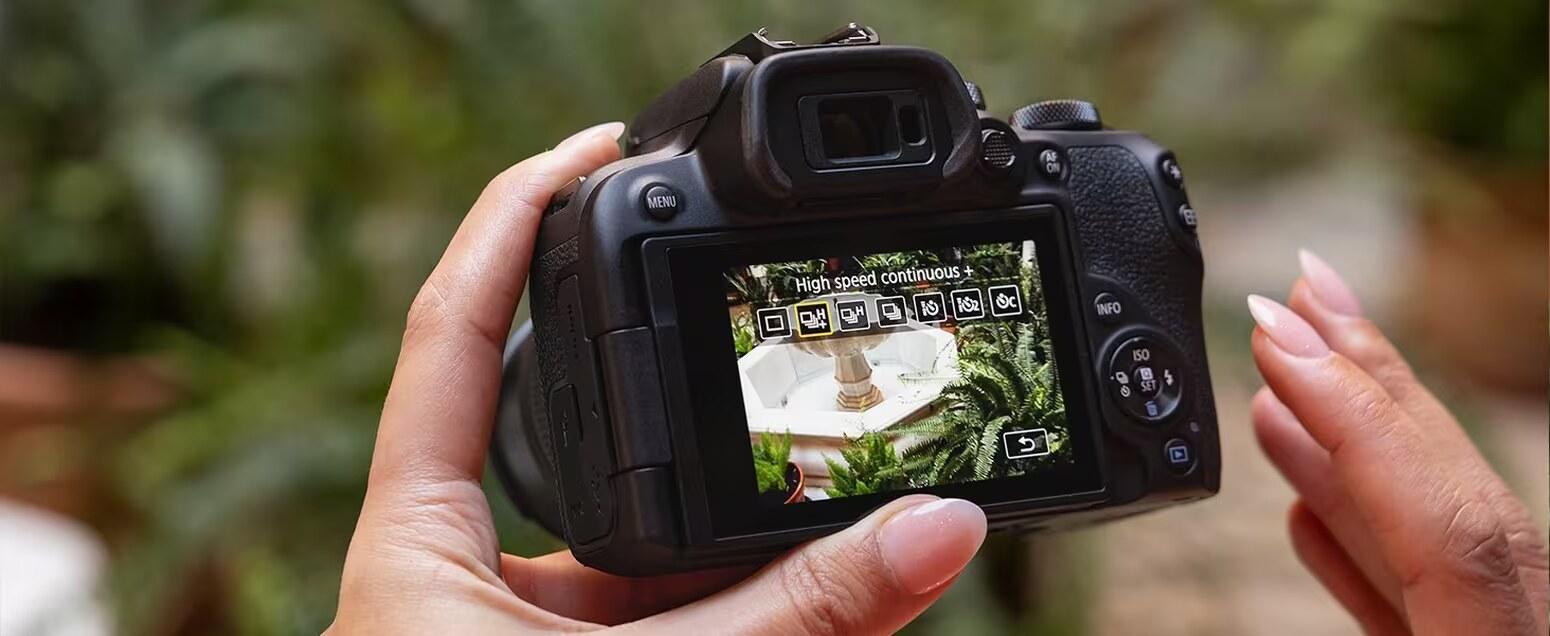
- R50: lighter, simpler, easier first “real camera.”
- R10: faster, more capable body for action and hybrid shooters who want more headroom.
Jump off links (our deep dives):
The short verdict
Buy the Canon R50 if you want:
- the smaller and lighter body
- a lower-friction first interchangeable-lens camera
- great family, travel, and casual creator use
- solid 4K without needing advanced video modes
Buy the Canon R10 if you want:
- faster burst shooting (more “chances per second”)
- better action/wildlife performance
- 4K60 (with crop)
- UHS-II card support
- more room to grow before you hit the camera’s limits
R10 vs R50 at a glance (mobile-friendly)
Core imaging
Speed + action
Video + cards
Size + carry
R10 balances better with bigger lenses
Image quality: closer than most people expect
This is the part that trips people up. The R10 and R50 look far apart on paper, but in everyday stills the base files are often more alike than different.
Both share the same image quality foundation (24.2MP APS‑C + DIGIC X). Put the same lens on both cameras, shoot the same scene in good light, and the output will usually be in the same family. The R10 doesn’t win because the sensor is dramatically better — it wins because the body around that sensor is more capable.
Autofocus and speed: the “more keepers” difference
If you shoot action (kids’ sport, pets, birds), the R10 tends to give you more keepers because it gives you more chances per second. The R50 can handle casual action, but it’s not as clearly built for doing it often.
That’s the difference between a camera that can do action and a camera that’s comfortable doing it all the time.
Video: the R50 is good, the R10 is broader
The R50 tops out at 4K30. The R10 goes to 4K60, and Canon explicitly notes that 4K60 on the R10 is cropped to 64% of the horizontal area. Canon also calls out the R10’s 4K30 oversampled-from-6K mode, which is a strong feature in this class.
That creates a clean use-case split:
The R50 is enough for:
- YouTube
- reels/short-form
- family video
- normal talking-head content
- simple hybrid use
The R10 is better for:
- more flexible motion and action footage
- more serious hybrid work
- creators who want extra video headroom without going full pro
Canon also gives the R10 a 2-hour maximum continuous movie recording time (normal movies) versus 1 hour on the R50, although heat/runtime caveats still apply to some modes. Canon separately notes a 4K30 HQ runtime of about 50 minutes (starting cool at 23°C) for the R10, and notes similar “starting cool” behavior for other models in this class.
Storage
and SD cards: the hidden difference that matters a lot
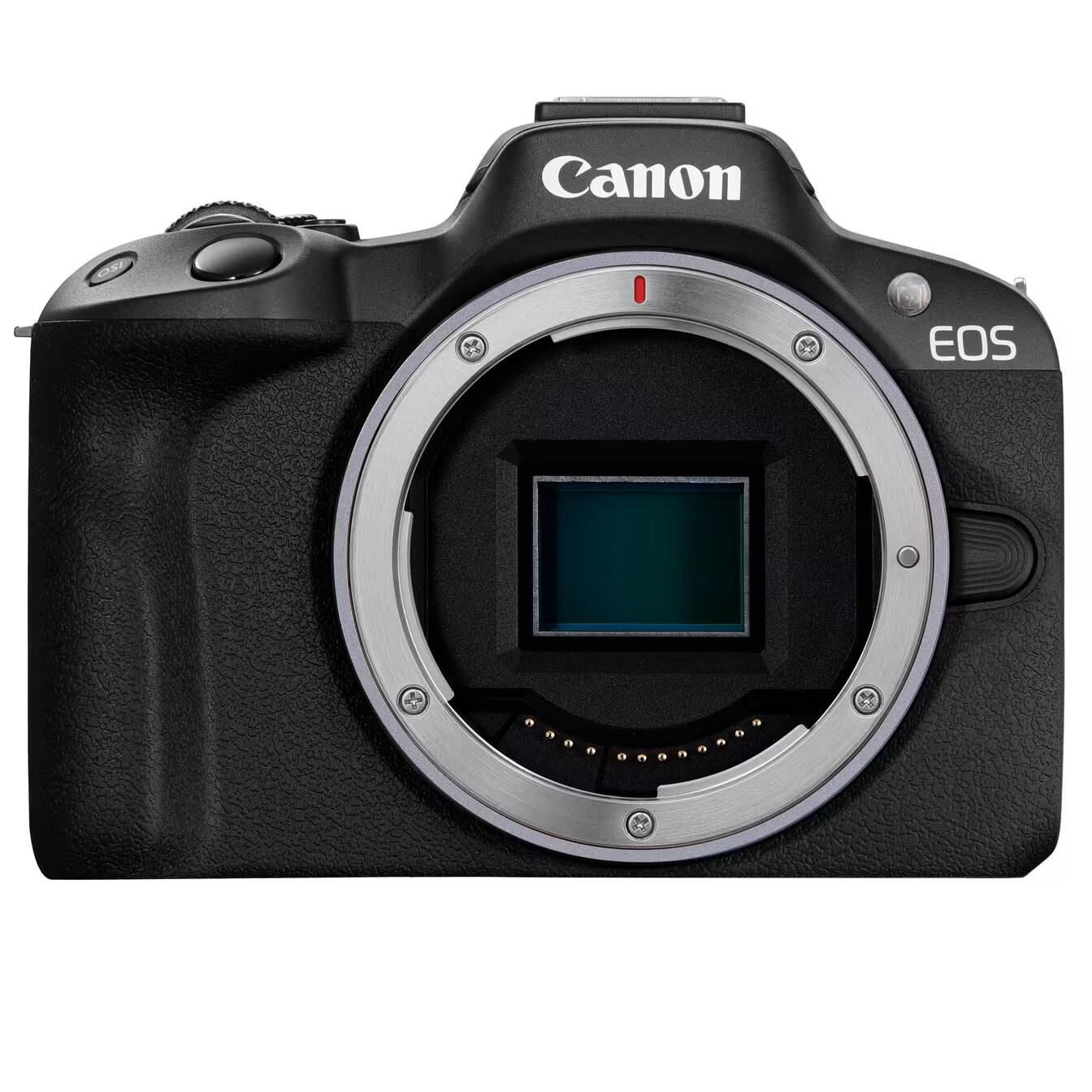
This is where the R10 quietly becomes much more attractive for serious use.
- R50: UHS‑I only → the sensible card is a UHS‑I U3/V30 SDXC.
- R10: UHS‑I + UHS‑II → there’s a real reason to buy a UHS‑II V60 if you shoot 4K60 or sustained bursts.
This is one of those differences that looks boring on a spec sheet but feels very real in use. The R10 clears buffer pressure better and is built for a more demanding pace. The R50 is simpler and cheaper to feed.
Battery life and ports
Both cameras use the LP‑E17 battery. Canon rates the R50 slightly higher on LCD and EVF shot counts than the R10. In real terms: both are “bring a spare” cameras, with the R50 holding a small edge in Canon’s CIPA figures.
Both include:
- 3.5mm mic input
- USB‑C
- micro HDMI (Type D)
Neither is positioned as a compact cinema tool with full on-camera monitoring (no headphone jack listed in the sources we used for these pages).
Size and handling: personality matters
The R50 is easier to throw in a bag and feels less intimidating. The R10 is more substantial in the hand, balances better with bigger lenses, and tends to feel more comfortable when you start using the camera harder.
Who should buy the Canon R50?
- first interchangeable-lens camera
- light RF body for travel and family photos
- casual content without advanced video needs
- you want the whole kit smaller and cheaper
- you’re unlikely to shoot lots of sport, wildlife, or long bursts
Who should buy the Canon R10?
- you shoot action, birds, pets, or sport
- you want 4K60
- you want UHS‑II support
- you expect to grow into the camera rather than outgrow it
- you prefer a slightly bigger body and stronger handling
Canon R10 vs R50: which is better value?
This depends almost entirely on the price gap:
- R50 = better value if budget and size matter most
- R10 = better value if performance and headroom matter most
FAQs
Is the Canon R10 better than the R50?
Yes, in overall performance. The R10 gives you faster burst shooting, 4K60, and UHS‑II card support. The R50 is still a strong option if you want a lighter, simpler, and less expensive body.
Does the Canon R10 have better image quality than the R50?
Not in a dramatic way. Both use a 24.2MP APS‑C sensor and DIGIC X processor, so base image quality is broadly similar. The bigger differences are speed, handling, storage support, and video features.
Is the Canon R50 good enough for YouTube?
Yes. It’s a good creator camera for people who want 4K30, a compact body, mic input, and easy everyday use. The R10 is better if video is becoming a bigger part of your workflow or you want 4K60.
Does the Canon R10 crop in 4K?
Yes in some modes. Canon explicitly states 4K60 on the R10 is cropped to 64% of the horizontal area. Canon also says the R10’s 4K30 can be oversampled from 6K.
Does the Canon R50 support UHS-II cards?
No. Canon lists the R50 as UHS‑I only. The R10 supports both UHS‑I and UHS‑II.
Recommended next reads
Canon R50 Guide: Back to the Canon R50 Guide
Canon R10 Guide: Back to the Canon R10 Guide
