

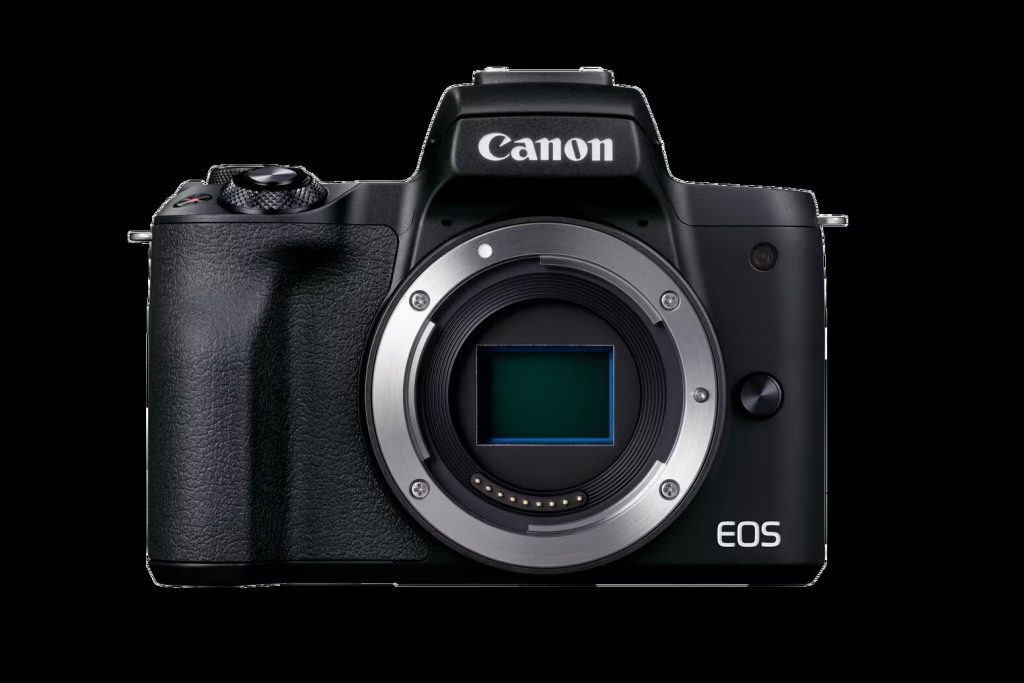
Canon M50 vs M50 Mark II (Mark 1 vs Mark 2): what’s different, and which to buy?
If you’re comparing the Canon EOS M50 (Mark I) vs the EOS M50 Mark II, the key point is simple: most buyers won’t see a big photo-quality gap. The Mark II’s “upgrade” case is mainly features and creator workflow (how easy it is to film yourself, stream, and get clean output), not a new sensor.

Jump off links (our deep dives):
The short verdict
- Photo-first buyers: if you shot the same scene with the same lens in good light, the files would be much more alike than different. Choose based on price and condition.
- Creator / streaming / selfie video buyers: the M50 Mark II is usually the better tool because Canon leans harder into creator-oriented features and workflow.
Side-by-side summary (mobile-friendly)
Core imaging
Upgrade is workflow, not sensor
System + storage
Skip: pricey UHS‑II
Speed + handling
Lens choice changes “carry feel” most
Video + creator workflow
Mark II = smoother creator tool
1) Photo image quality: why “Mark II” doesn’t mean better files here
A lot of buyers expect “Mark II” to mean noticeably better photos. With these two bodies, it mostly does not. Both support JPEG, RAW, and C‑RAW — and the core imaging specs are closely matched — so if you shot the same scene with the same lens in good light, the results would be much more alike than different.
That doesn’t mean the Mark II is “not worth it.” It means the value is rarely in the pixels. The upgrade case is features and workflow: how the camera behaves for face-forward shooting, how convenient it is for streaming/webcam use, and how well it supports creator-style setups.
2) Lens mount and system implications (the strategic point)
Both bodies use the Canon EF‑M mount. Both can use EF and EF‑S lenses with Canon’s Mount Adapter EF‑EOS M, which is a big practical advantage if you already own DSLR glass. Canon also notes RF lenses are not compatible with EF‑M bodies.
Where this matters is long-term. Buying either camera means buying into EF‑M: compact and convenient, but a smaller ecosystem than Canon’s newer RF/RF‑S world. If you already have EF/EF‑S lenses and you’re happy adapting, either camera becomes far more attractive. If you’re building from scratch and thinking about your next body upgrade, the mount is the main strategic downside for both.
Quick mental model: if you’re “buying a camera,” either is fine. If you’re “buying a system,” EF‑M is the part to think about hardest.
3) Autofocus and tracking (who actually feels the difference)
Canon highlights Dual Pixel CMOS AF on both models, but the Mark II is positioned much more aggressively for creator use cases (self-recording, face tracking, and simplified workflows). The practical difference is that the Mark II is the safer pick if you’re often in front of the camera and want it to stay locked on your face with fewer “babysitting” moments.
If you’re mainly shooting stills (kids, travel, casual portraits), you may not feel a dramatic gap day-to-day. Your lens choice, shutter speed discipline, and lighting will matter more than which of these two bodies you’re holding.
4) Burst shooting and action use
Canon rates both cameras at up to about 10 fps. That means neither has a headline advantage for burst speed. In practice they’re good for casual action (pets, family sport, travel moments), but they’re not specialist sports/wildlife bodies where you buy it because the action performance is elite.
If action is your main job, you’re usually better off judging the whole experience: how the AF behaves in your scenario, what lenses you can realistically use, and how often the buffer/card slows you down — not just the fps line on a spec sheet.
5) Video: what really changes
Both cameras support 4K and Full HD up to ~60p. The honest summary is that the Mark II is the better video body mainly because of convenience and creator workflow rather than suddenly becoming a high-end cinema camera.
- Mark I: solid beginner hybrid camera; good for casual video and learning.
- Mark II: same general video class, but more useful if you’re creating frequently and want smoother “press record and go” behavior.
For most people, both bodies are best treated as 1080p-first cameras for everyday filming. Use 4K when you have a reason (delivery requirement, cropping flexibility, controlled setup), not because it exists on the mode dial.
6) Streaming, webcam, and creator features
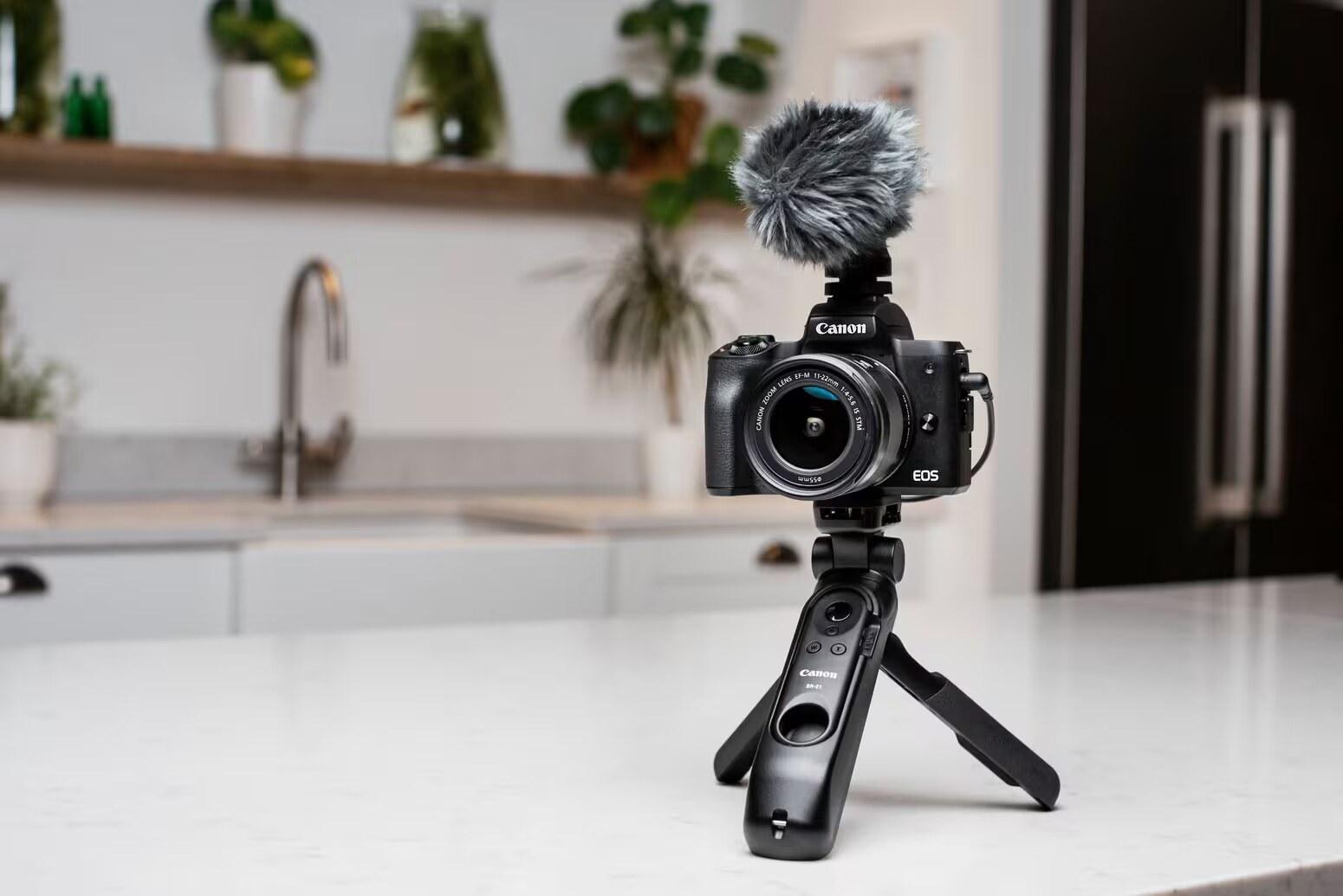
This is where the Mark II pulls ahead most clearly. If your use case is YouTube, online teaching, product demos, live streaming, or you want a camera that can act as part of a simple “creator rig,” the Mark II is typically the better fit.
In other words: the original M50 is a general-purpose camera that creators adopted. The Mark II is the version Canon tuned around how creators were actually using the M50.
7) Viewfinder, screen, and handling
Both share the same compact M50-style ergonomics and the familiar EVF + fully articulating touchscreen handling. If you like one in the hand, you’ll almost certainly like the other. The fully articulating screen remains one of the biggest practical wins for both travel users and creators.
8) Storage and SD card support (buy the right card, not the fanciest)
Both support SD/SDHC/SDXC and are positioned around UHS‑I. There is no “storage-system upgrade” going from Mark I to Mark II. That’s why overspending on premium UHS‑II cards is usually wasted money here.
Simple SD card pick for both cameras
- Speed: UHS‑I U3 / V30
- Capacity: 64–128GB for most users; 256GB if you record a lot of video
- Rule of thumb: plan by minutes of video, not just “GB”
9) Battery life
Both are in the compact LP‑E12 class. In real terms: they’re “bring a spare battery” cameras, especially for video, Wi‑Fi transfers, and lots of flip-screen use. If you’re planning creator workflows, treat one spare battery as normal kit, not an optional accessory.
10) Size and weight (portability is a shared strength)
Both sit in the same compact, lightweight class, and both exist because portability is part of the value proposition. If “small camera I’ll actually carry” is why you like one, it’s also why you’ll like the other. Your lens choice will change the total carry feel more than the body.
Best choice depending on how you shoot
Buy the M50 Mark I if:
- it’s meaningfully cheaper in good condition
- you shoot mostly photos
- you don’t care about streaming/webcam extras
Buy the M50 Mark II if:
- you film yourself often
- you care about creator workflow and output options
- the price gap is modest
Recommended next reads
- Canon M50 specs (size/weight, ports, storage guidance)
- Canon M50 video specs (what to choose in practice)
- Canon M50 Mark II specs (Canon card requirements + storage estimates)
- Canon M50 Mark II video specs
Canon M50 Guide: Back to the Canon M50 Guide
Canon M50 Mark II Guide: Back to the Canon M50 Mark II Guide
