

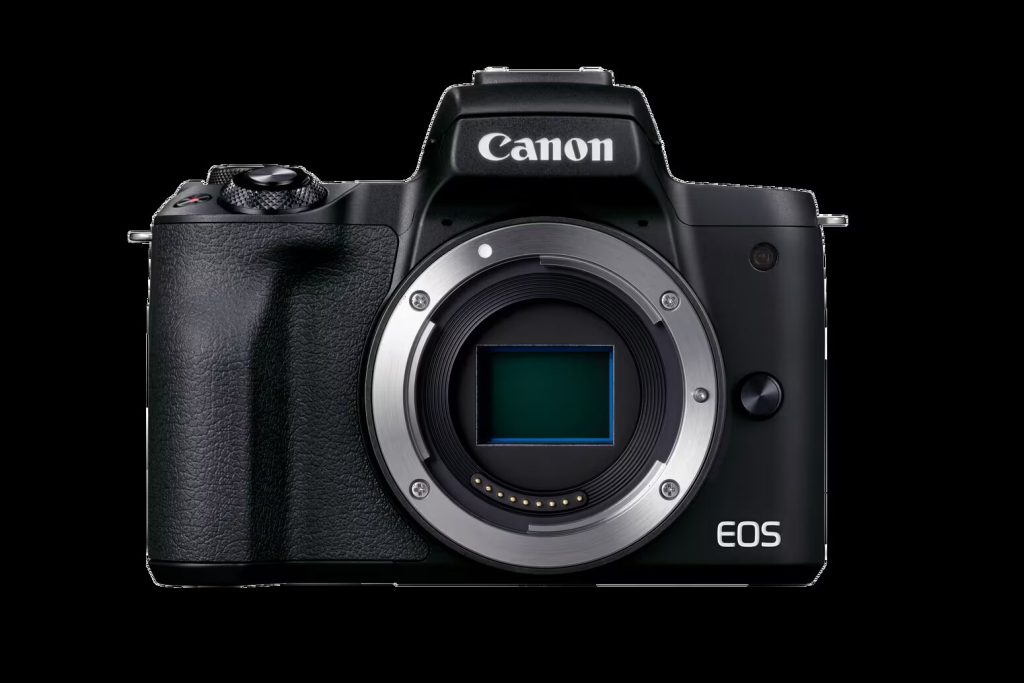
Canon M50 Mark II specs (practical spec sheet)
This is a practical spec sheet for the Canon EOS M50 Mark II: key specs, what they mean in real use, plus storage guidance based on Canon’s own card requirements and recording-time estimates.
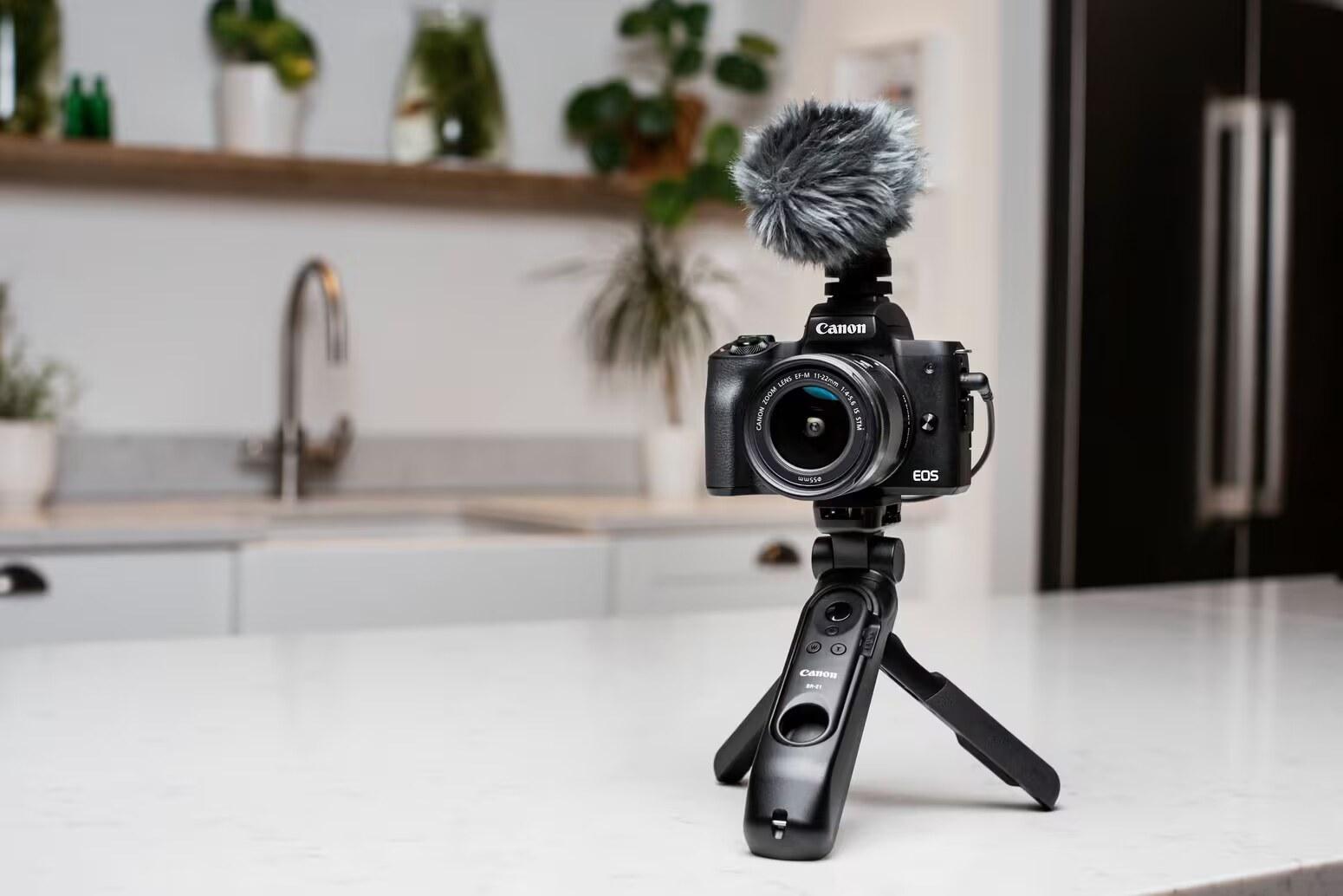

Canon M50 Mark II Guide: See all Canon EOS M50 Mark II setup + gear answers in one place.
Table of contents
Core camera specs
- Sensor: APS‑C CMOS (approx. 22.3 × 14.9 mm)
- Effective resolution: 24.1 MP
- Processor: DIGIC 8
- Lens mount: Canon EF‑M
- Stills formats: JPEG / RAW / C‑RAW
- Video container/codec: MP4 (H.264 / MPEG‑4 AVC), audio AAC (per Canon specs PDF)
- Recording media: SD / SDHC / SDXC; UHS‑I compatible (per Canon specs PDF)
Sources: Canon official specs PDF + Canon Europe pages + Canon user manual (links provided by Brad).
Lens compatibility (system reality)
- Native lenses: EF‑M
- Adapter path: EF and EF‑S lenses via Canon Mount Adapter EF‑EOS M (Canon-supported route)
- Not compatible: RF lenses cannot be used on EF‑M mount (per Canon specs PDF notes)
Image sizes and formats
Canon lists full-resolution stills at 6000 × 4000 (3:2). RAW/C‑RAW capture remains available for maximum post-processing flexibility.
ISO and exposure
- Still ISO: ISO 100–25600 (expandable to 51200)
- Metering modes: evaluative / partial / spot / center-weighted
In practice, this is plenty for everyday photography and general low-light use, with the expected limits of an APS‑C sensor compared to larger sensors.
Autofocus
Canon emphasizes Dual Pixel CMOS AF and highlights Eye Detection AF improvements aimed at creator-style shooting (selfies, talking-head video, and general face tracking).
Viewfinder and screen
You get a built-in electronic viewfinder plus a 3.0-inch fully articulating touchscreen — the flip screen is a major practical advantage for video, product demos, and awkward-angle shooting.
Burst shooting
Canon lists continuous shooting up to about 10 fps with One‑Shot AF, with lower rates when continuous autofocus is involved. Real burst depth depends on card speed and settings.
Video specs (headline)
- 4K (UHD): 3840 × 2160 at 23.98 fps (IPB)
- Full HD: 1920 × 1080 up to 59.94 fps (IPB)
- HD: 1280 × 720 up to 119.88 fps (High Frame Rate Movies)
- Live streaming: supported (per Canon specs PDF)
Real-world take: the Mark II story is workflow (creator features, output options, tracking improvements), not a dramatic jump in raw image quality. For most people it’s still a 1080p-first camera for the smoothest everyday experience, with 4K used more selectively.

>Video storage estimates (Canon’s chart)
Canon’s own recording-time chart is the fastest way to choose card size:
- 32GB card: ~35 min 4K; ~1h 10m Full HD 60p; ~2h 20m Full HD 30p
- 128GB card: ~2h 21m 4K; ~4h 43m Full HD 60p; ~9h 23m Full HD 30p
SD card requirements and recommendations
Canon minimums (from the official card performance table):
- 4K 23.98 (IPB): UHS‑I, UHS Speed Class 3 or higher
- 1080 59.94 (IPB): SD Speed Class 10 or higher
- 720 119.88: SD Speed Class 10 or higher
What to buy (simple)
- Speed: UHS‑I U3 / V30 SDXC
- Capacity: 64GB (casual) → 128GB sweet spot → 256GB (long sessions / lots of video)
- Skip: paying extra for UHS‑II here (Canon positions support around UHS‑I)
Battery
- Battery: LP‑E12 (per Canon materials)
Canon’s official ratings are modest — if you shoot video, use Wi‑Fi, or keep the flip screen on a lot, plan on carrying at least one spare.
Connectivity and ports (creator angle)
- Wi‑Fi + Bluetooth
- 3.5mm microphone input
- Clean HDMI (Canon positioning)
- USB output (Canon positioning)
- USB terminal: USB Micro‑B (Hi‑Speed USB 2.0) (per Canon specs PDF)
- HDMI: Type D (micro HDMI) (per Canon specs PDF)
Physical size and weight
Canon lists the body as genuinely compact and light:
- Dimensions (W × H × D): approx. 116.3 × 88.1 × 58.7 mm
- Weight: approx. 387 g (including battery and memory card) / approx. 350 g (body only)
Bottom line
The EOS M50 Mark II is a refined creator version of the M50: a strong fit for beginners, travel, family photography, livestreaming, YouTube, and 1080p content creation. Its weak points remain the EF‑M mount’s long-term roadmap, small battery, UHS‑I-only storage, and the fact it isn’t a true 4K powerhouse — but for straightforward daily shooting and creator workflows, it’s still a very usable little camera.
More Canon M50 Mark II help: Back to the Canon M50 Mark II Guide
