


Canon R10 Guide (EOS R10)
The Canon EOS R10 is a faster, more capable APS‑C RF body than the R50. In practical terms: it gives you more headroom for action, hybrid shooting, and tougher video/card workloads, while still staying compact.
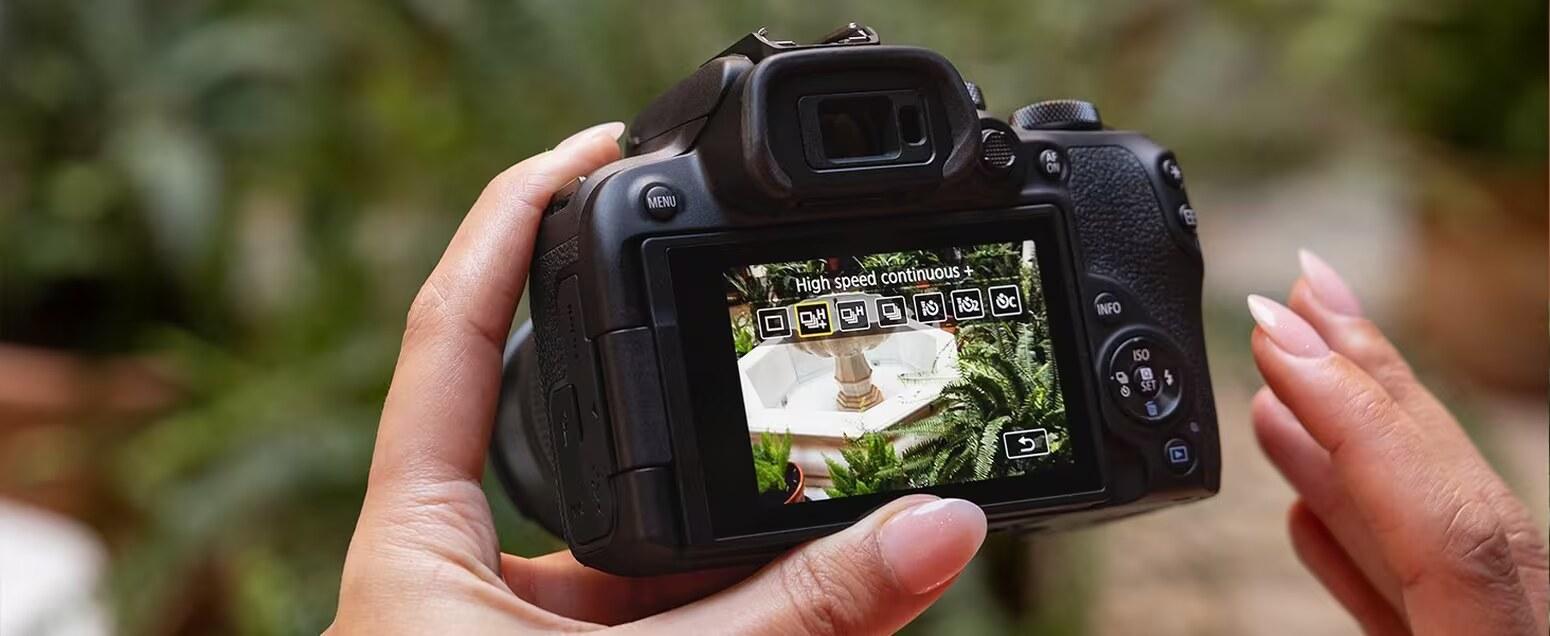

Canon R10 at a glance (Canon-sourced)
- Sensor: APS‑C CMOS (approx. 22.3 × 14.9 mm)
- Resolution: 24.2 MP effective (25.5 MP total)
- Processor: DIGIC X
- Mount: Canon RF mount (RF + RF‑S lenses; EF/EF‑S via Canon EF‑EOS R adapters)
- Files: JPEG, HEIF, RAW (.CR3), Dual Pixel RAW, RAW burst, C‑RAW
- Cards: SD / SDHC / SDXC; UHS‑I + UHS‑II supported (single slot)
- Video headline: 4K up to 59.94/50p; Full HD up to 119.88/100p
Recommended SD cards (standardized, mobile-friendly)
Best match for this body
- Minimum: good U3 / V30 (UHS‑I or UHS‑II) for lighter 4K work
- Recommended for 4K60 + sustained bursts: UHS‑II V60
- Why: Canon explicitly supports UHS‑II and recommends high-speed cards for 4K video and high-speed continuous shooting
Ports, audio, and storage quick answers
- Headphone jack: no dedicated 3.5mm headphone output, so plan on playback checks or external-recorder monitoring instead.
- Mic input: yes, the R10 supports an external 3.5mm microphone input.
- UHS-II support: yes, Canon supports UHS-I and UHS-II cards on the R10, which is why faster cards can make sense for 4K60 and sustained bursts.
If you are buying cards for this body, the practical difference is simple: a good U3/V30 card is fine for lighter work, but UHS-II V60 is the better fit if you lean on the R10’s tougher video modes or longer burst sessions.
Quick links (Canon R10)
- Canon R10 specs (practical spec sheet)
- Canon R10 video specs
- Canon R50 guide (if you’re cross-shopping smaller RF bodies)
Quick answers (Canon R10)
Video
- Does Canon R10 crop in 4K60?
- Canon R10 recording limit (2 hours normal / 30 min HFR)
- Canon R10 YouTube live streaming: can it do it?
SD cards and storage
- What SD card for Canon R10? (UHS-II vs UHS-I explained)
- Does Canon R10 support UHS-II SD cards?
- Canon R10: movie files exceeding 4GB (SDHC vs SDXC behavior)
- Low level format on Canon R10 (Canon’s 4K recording tip)
Audio / ports
Bottom line
If you’re the kind of shooter who fills buffers, shoots action, or wants 4K60 with fewer compromises, the R10 is usually the better RF APS‑C “do-it-all” pick than the R50. If you’re strictly travel/family/basic creator work and want the smallest/cheapest RF body, that’s where the R50 still wins.
