

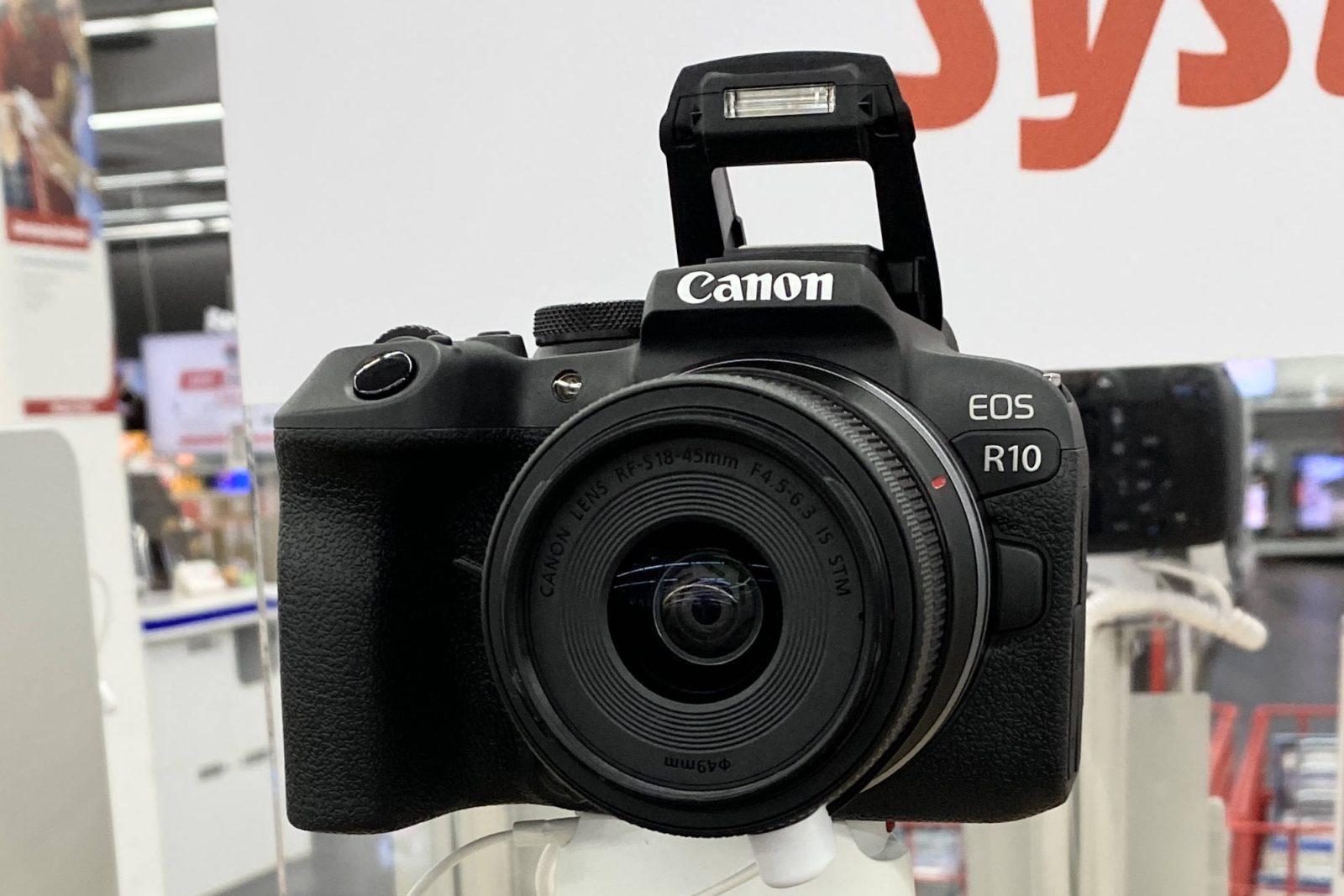
The Canon EOS R10 is the smart middle ground in Canon’s RF crop lineup. It is smaller, lighter, and cheaper than the R7, but still quick enough and capable enough for travel, family shooting, beginner wildlife work, and a lot of hybrid photo/video use.
Canon EOS R10 at a glance
- Camera type: APS-C mirrorless
- Sensor: 24.2MP APS-C CMOS
- Burst speed: up to 15 fps mechanical, up to 23 fps electronic
- Video: 4K up to 30p from oversampled 6K, plus higher-frame-rate Full HD modes
- Battery: LP-E17
- Lens mount: RF / RF-S (EF and EF-S via adapter)
Who the EOS R10 is best for
- Beginners moving past a phone or entry DSLR who want a modern autofocus jump.
- Travel shooters who care about low weight more than pro-body handling.
- Canon users starting fresh in RF-S and wanting a practical all-rounder.
The main buying decision is whether you want the body only or the standard kit. For most first-time buyers, the RF-S 18-45mm kit is the cleaner starting point. Body only makes more sense if you already own RF glass or plan to adapt EF lenses immediately.
Quick price check
Why people choose the R10
The R10 hits a useful sweet spot. It feels meaningfully more capable than the cheapest entry bodies, but it does not drag you into the size, price, and feature tier of the R7. That makes it one of Canon’s easier recommendations for people who want a camera that can grow with them without becoming a heavy project.
What to watch before buying
- Battery life is fine, not amazing: travel and event shooters often want a spare.
- Controls are lighter-duty than the R7: that matters more to advanced users than to first-time buyers.
- Lens planning still matters: a small body can feel less balanced with larger adapted EF telephoto lenses.
Related EOS R10 guides on DSLRad
- How to check shutter count on Canon EOS R10
- How to reset Canon R10 to factory settings
- How to enable silent shooting on Canon EOS R10

Bottom line
If you want a compact Canon mirrorless camera that still feels fast and modern, the EOS R10 is easy to like. Start with the kit if you need an everyday lens from day one. Pick body only if you already know your lens path.

Brad is a seasoned photographer whose journey began in 2006 with a 3.1-megapixel digital camera. Over the years, he has specialized in various photography genres—from weddings and portraiture to product and studio photography. Based on the Sunshine Coast of QLD, Brad combines his love for education and photography, sharing his expertise on DSLRAD.com, a platform committed to capturing life’s treasured moments and empowering photography enthusiasts.